
Finding Common Ground in Technology, Sustainability and Trust

Selling to architects and designers is not like selling to other commercial buyers because they think differently.
For 22 years, BOND's architect and designer events have given manufacturers a competitive edge in understanding and serving the needs of these exacting professionals: When it comes to developing relationships with the architects and designers everybody's chasing, nothing beats a good chunk of quality time together, away from the office.
But, aside from making the right impression on the true project influencers (when you get the chance), there are things you need to get right when selling to time-pressured architects and designers. This article is your guide to what you need to focus on to win meaningful business in this ultra-competitive sector. We hope you find it useful.
Think Way Beyond Transactional
Architects and designers think beyond what a thing costs and what it does; they also have their reputation, creative expression and client satisfaction to consider. Winning over a reputable architect or designer is less about selling features and more about aligning with their (and their firm’s) philosophy and vision for the built environment, including how well the building performs years after sign-off.
Establishing shared ground over what matters most to an architect is key and this is where manufacturers who embrace innovation, care about sustainability and longevity and who want authentic collaboration will build trust and win more meaningful business in the longterm.
What Motivates Architects and Designers?
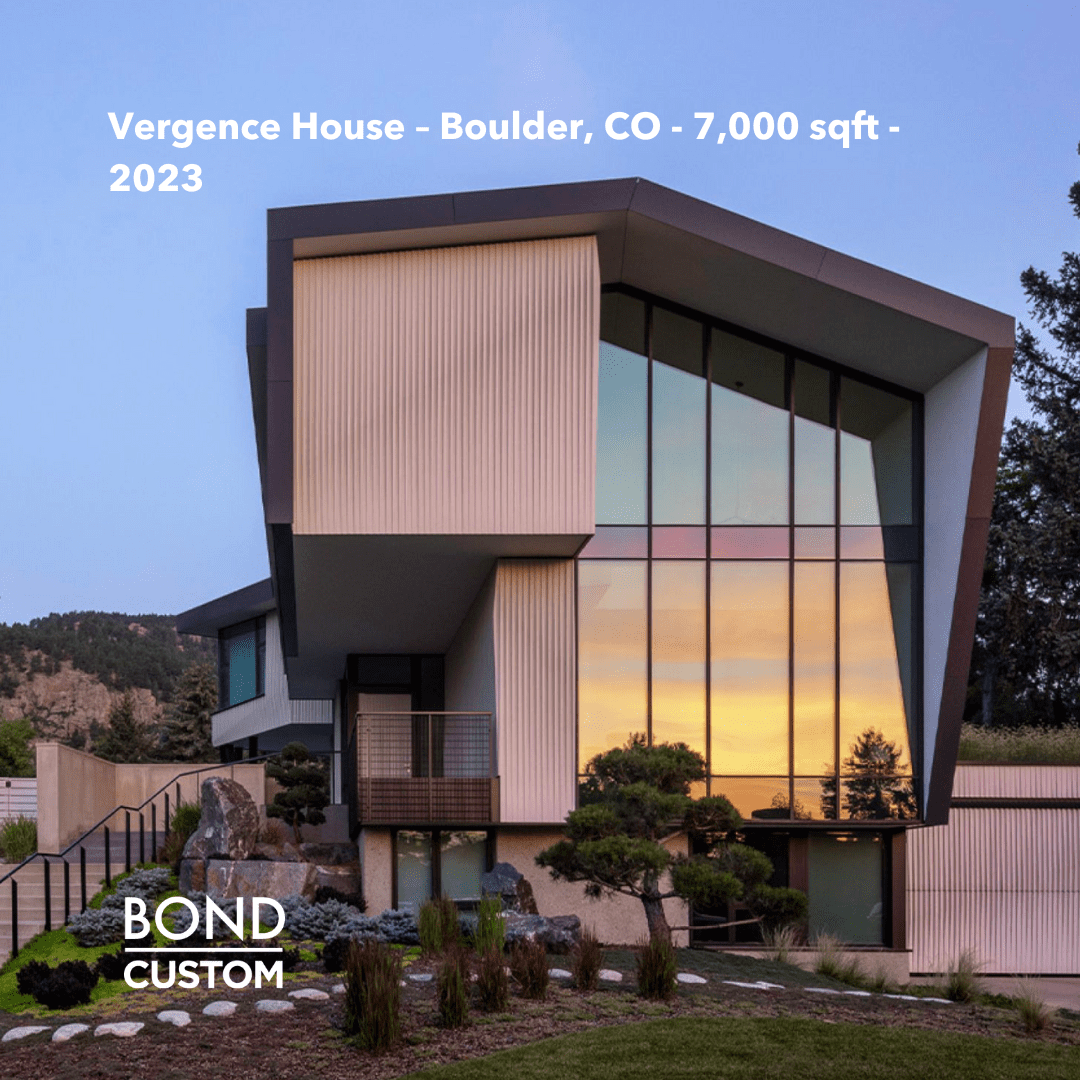
Performance, Creativity and Legacy
Think about the bigger picture: architects and designers are not just specifiers – they create environments. Their decisions will be seen, felt and critiqued for decades so they are motivated on many levels that endure beyond simply getting the best deal.
Quality and Longevity
Your product will still be part of a building long after it is specified and installed. If it doesn’t perform as promised or causes maintenance issues, it will reflect poorly on the architect or designer who specified it. An architect’s reputation ultimately depends on how well a building performs for its users over its lifetime (average useful life of a building in the US is 75 yrs).
Quality and longevity mean more to reputable architects and designers than price does.
Design Intent
Even if a product is better made or technically superior, if it ultimately compromises the form, feel or overall experience of a space by sticking out like a sore thumb, it will likely be rejected. And this is where manufacturers who are able to access thought leaders from the architectural and design community in the development of their own products are at a distinct advantage:
“Coming away from ARC Middle East in Oman, I was blown away by how generous the architects were with their advice on how to navigate the system out there. But, also, we now have what is effectively a ready-made market research panel. We love that feedback - positive, negative, whatever it might be – it’s the hard truths we need to know about."
Rob Geller, VP Business Development, Promenaid Handrails
Innovation
Architects and designers love innovation and get seriously excited about new solutions - materials, technologies and systems that help them to push boundaries and even solve long-standing industry problems. And it's never too early to engage.
Collaborating with architects or designers during concept and design stages to come up with something groundbreaking together will see you both thriving and relishing the experience of working together. And this is a key point - the emotional experience that a creative architect or designer has when working with you will determine how motivated they are to repeat it, or not.
More on 'it's never too early' here: How to Get Specified by Architects
Sustainability Matters
Architects are increasingly held responsible for the environmental credentials of everything they specify. Manufacturing processes and sales messages need to be aligned with carbon accounting, latest certifications and, ultimately, planetary and occupant well-being. An architect’s concerns around sustainability and decarbonisation are twofold:
- Supply chain (securing raw materials, manufacture and transport/installation)
- Operational (energy efficiency, emissions, recyclability)
Suppliers who can demonstrate they are cutting carbon use in getting products onsite and in their lifecycle usage will get an architect’s attention fast. Aligning with an architect’s environmental and human welfare sensibilities means you are actually enhancing their design legacy which makes working with you a much more compelling proposition all round.
Speak their Language: Evidence-Based, Technical & Visual

Architects and designers imagine visually, interpret information spatially, and make decisions based heavily on technical evidence.
When presenting your products, you need to prioritize:
Technical documentation
- Spec. sheets
- BIM/Revit models
- CAD files
- durability tests
- installation drawings
- code compliance summaries
These resources will make it easier for them to specify and back your product.
Imaginative, story-driven visuals
Architects love:
- high-res architectural photos
- exploded diagrams
- renderings
- lifecycle infographics
Anything that helps an architect or designer to visualize how your solution fits into their concepts and how it enhances end-user experience will win you fans.
Case Studies
Backup your claims with proof:
- completed project photos
- performance feedback from clients/end-users
- environmental impact calculations
- acoustic/thermal comfort metrics
Facts help architects feel secure that they’re making the right decision to spec. your products and this helps them sleep at night. Awww.
Build Common Ground over New Technology

Architects get excited about innovation, but it also needs to solve pain points that their client will appreciate. When presenting new technology, clarify how it helps them to deliver excellence for their clients - this is the real value that gets an architec's attention.
Innovation can be effectively sold in three layers:
Functional
“It learns your temperature preferences and adjusts automatically to save energy”
Practical
“It's simple to instal and reduces maintenance costs by over 30%”
Visual
“Look at it! Don't you just want to touch it!”
This multi-layered approach speaks both to engineering rigor and creative sensibility – the languages of architects and designers.
There’s also a real emotional dimension to innovation: architects and designers want to bring something worthwhile into the world. If your product helps them create healthier, smarter, more beautiful spaces, it will likely be adopted as part of their signature approach and that of their firm.
You can lead with sustainability but you need to prove it
Environmental considerations have a heavy influence on most design decisions today but there is a disconnect: pretty much all suppliers claim sustainability, but only some can prove it. You need to present evidence like:
- EPDs (Environmental Product Declarations)
- LCAs (Life Cycle Assessments)
- VOC certification
- carbon footprint data
- compliance with LEED, WELL, BREEAM, or local standards
And, if you can illustrate some circular-economy principles such as recyclability, take-back programs or disassembly logic, your proposition is strengthened.
Ultimately, your sustainability ‘story’ needs to go beyond documentation: the architect or designer needs to feel that you, as a company, genuinely care about environmental and end-user welfare as much as they do. It’s that alignment thing again.
Provide tools that aid the approval process
One of the greatest differentiators when selling to architects and designers is whether you help to reduce their workload so be generous and thoughtful with the tools you provide.
Provide digital tools such as:
- downloadable BIM objects
- material palettes
- installation details in multiple file formats
- render-ready textures
- parametric models
Provide process tools:
- pre-written master spec language
- warranty templates
- sample cost estimates
- project-specific engineering support
A supplier who eliminates friction from the decision-making process will always be favoured over one who just promotes features. The positivity around the initial sell can soon be lost if an architect can’t easily find the backup information they need.
Treat Samples as an Emotional Touchpoint
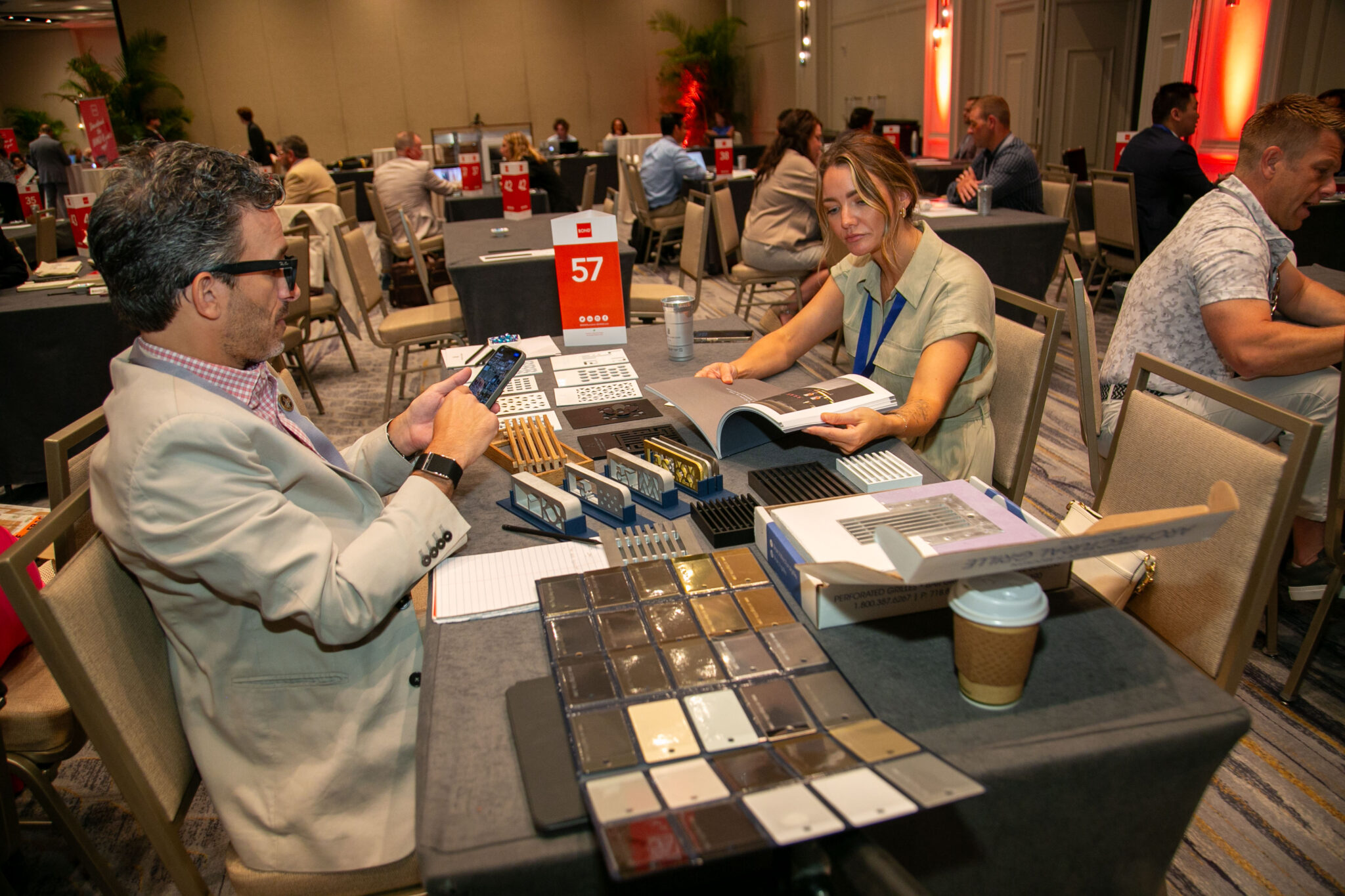
Designers specify products they can see, touch, and interact with.
Make samples:
- elegant
- labelled clearly
- accompanied by technical data
- with QR codes linking to helpful digital resources
Physically experiencing a product triggers confidence and more progressive conversations.
Additionally, consider:
- mock-ups
- comparative sample kits
- installation trial units for site testing
Don’t just see samples as giveaways – they're perfectly placed to be used as specification conversion tools.
Provide education and value, not sales pressure
Architects and designers love to learn and architects need to actively pursue continuing professional development. This makes education-led selling extremely effective.
Some educational sales aids to consider:
- AIA/continuing-education accredited seminars and modules
- technical workshops
- design studio presentations
- sustainability-focused webinars
- on-site product demos
Education helps to eliminate scepticism because learning is a joy and feels like value, not persuasion.
When you provide learning that deepens their expertise, you earn affection and trust – the foundations for long-term, meaningful business. And, if you literally open your doors so architects and designers can come in and see how you do things, they are likely to learn something and you will occupy an affectionate space in their mind.
Demonstrate dependability and long-term support

Architects and designers carry a lot of responsibility, so they need dependable project partners, not vendors. This means you need to take responsibility for providing whatever information and support an architect might need from design and bidding, through installation and any after-sales support. Architects and designers need you to be dependable and accountable as missing any delivery/instal schedules can impact an entire project and see costs rocket.
To build trust:
- respond quickly and generously to questions
- be helpful with whatever they throw at you
- provide solutions/recommendations tailored to specific projects
- be open and transparent about uncertainties, limitations or risks
- Deliver when you say you will
- always follow up after installation (Don’t just disappear)
The relationship needs to continue beyond purchase and installation to take you from being a vendor to being a dependable design ally, project partner and trusted adviser.
Understand the architect’s internal ecosystem (how they work and who they work with)
Buying decisions are rarely isolated. Architectural and design decisions usually involve:
- design team(s)
- technical team(s)
- project managers
- sustainability consultants
- client representatives
- engineering partners
- general contractors
- building officials
- Plan Checkers
- Building Department Field Inspectors
Getting beyond specification to installation means aligning with multiple stakeholders. To strengthen your case, provide:
- summary sheets for client presentations
- risk-mitigation statements
- cost-benefit comparisons
- visual reference boards
Conversations may start externally but they continue inside and that’s where final decisions are made. Giving architects and designers the tools they need to sell you internally will strengthen your case against other options that may be on the table.
Don’t sell features - sell what it helps them to achieve
Architects and designers, like anybody, respond most strongly to desirable emotional outcomes. It’s how you frame it. For example, instead of:
“This material has a high acoustic rating.”
Say something like:
"It’s all about end-user welfare and our material reduces workplace noise fatigue, so occupants will be happier and more productive and your client will love it.”
Or, instead of:
“This facade panel is 30% lighter.”
Say:
“The lightness means faster, safer installation, smaller structural requirements, and more design freedom.”
You are not selling products - you are selling the effect of your product on performance, aesthetic freedom and, ultimately, client experience and satisfaction, all of which makes the architect or designer look good.
Think beyond what your product does to what it can do for your client and theirs.
Ultimately, you are building relationships based on trust

Doing meaningful business with architects and designers goes way beyond selling. Whether it’s face-to-face, on the phone, over email or through the digital tools you provide, selling to architects and designers is not about convincing – it’s about aligning so they feel the common ground between you.
It’s also about delivering on your promises and being equally available and accountable before, during and after installation. It’s about providing the things that an architect or designer needs to know that they are making the right specification choices for their clients. This is what being a reliable supplier partner is all about and doing this consistently is what builds trust and brings repeat business.
Trust comes from:
- reliability of information
- transparency
- real-world examples
- industry references
- consistent delivery and follow-through
- making them look good
Trust grows when you help them to look good in front of their clients, when your product performs like you said it would and when you are present and accountable through any challenges that will inevitably arise.
It’s a long game. Decisions made today may take months or years to materialize as part of a building or space. Trust is your best assurance that, across that timeline, your product or solution remains specified and will be specified again and again.
Face-to-face is unbeatable

Establishing that common ground and building trust has to start somewhere. And what better place than with a handshake and a look in the eye?
Architects and designers build things with people they trust
Each project brings unique challenges and the architects and designers at the leading edge of their industries need to build dependable networks of specialists and trusted advisers who they come to rely on for knowledge, support and friendship. No project that bears an architect’s name was built alone. So, if anything is being sold or presented as a useful part of the project puzzle it is you and the confidence you have in your product, in your team and in yourself.
Because architects and designers are on a mission. And that mission is to deliver outstanding and enduring results for their clients, so their clients love them and come back for more. This is what they care about and this is what they want you to help them with. And they’re going to need to spend some time with you to get an inkling of whether or not you can help them on their mission.
Phone calls or emails won’t do it. Trade shows might help but they’re big, noisy and very, very competitive. Lunch and learns could work but they’re so often cancelled, or the people you need to impress don’t show.
BOND will deliver the architects and designers who call the shots on the projects you want in on. They will also guarantee a number of uninterrupted 1-on-1s with your very best prospects. Then there’s a whole three days and nights to be led by your curiosity and helpfulness to see opportunities manifest in front of you.
Do your research
When you have the very real prospect of introducing yourself and your products to a guaranteed number and quality of architects in a short timeframe, it’s tempting to just turn up and wing it. After all, the hard work of identifying and getting commitment from the most in-demand architects and designers is already done. But, turning up unprepared for such a gathering is a missed opportunity.
BOND gives you a two-week window to access detailed profiles on the firms and individuals attending, including some of their confirmed projects. This info. is essential in guiding you to make the most informed choices on who you’d most like to meet and it’s not always the most obvious brands.
Furthermore, if you can show that you’ve done your research from the questions you ask when you meet these time-pressured design professionals, they will appreciate it and you will be rewarded with a suitably generous and insightful response.
In fact, if you go into a BOND event with good research notes and a genuine curiosity and thirst to know more about the person you’re meeting and what they are looking to find at the event, you are much more likely to strike a chord and make a more memorable impression than someone who just fires off a sales pitch and hopes for the best.
BOND builds the guestlist and sets the stage for relationships to thrive, but you need to do your research on who’s here. And, if you have a passion for the architecture and design industry and like to keep informed about current trends, directives and challenges, you’ll have even more to talk about. Furthermore, when you’re talking to the people at the leading edge of construction and design, your shared knowledge and passion might just see you collaborating on some innovative, new solutions together and this is the stuff that architects and designers love most of all.
Follow up after the event

The timeline for every ‘deal’ is unique. There is no doubt that many deals are effectively done at BOND and that a good many more foundations are laid. But let’s keep it real: a project might take 1 to 3 years in the design process so you need to be in for the long game and patience and persistence with your follow up are your friends here.
Again, you need to see things from the architects’ side: their gatekeepers will be bombarded with sales messages every day but if you have established a personal connection with one of these highly protected project influencers, you should get through the firewall. It might be something you BONDed over that has nothing to do with architecture or design at all but it will help them to remember you so you can get a message through to them after the event.
Personal or insider info. will help you get your message through. Then it’s a case of being consistent with short, memorable messages to make sure you stay front-of-mind for when any requirement or advice might be needed around your product or expertise: Be consistent, be generous with your knowledge and be available – all the things a time-pressured architect or designer looks for in a long-term project partner.
Want to know how to sell to the world’s leading architects and designers? Get some 1-on-1 time booked with your best prospects and turn up with faith in your product and in yourself and with a genuine curiosity about the person you’re meeting. Make it your goal to understand things better from their side and to establish some common ground. This is where trust starts to build and relationships begin. And, when the architects and designers you’ve been chasing for years start to get a sense of who you are and that you may be able to help them in their quest to deliver the very best solutions for their clients, the chase is won and collaboration begins.
The people with the projects and the clout to decide who gets specified and who doesn’t will be in attendance at any one of BOND’s architecture and design events soon. If you’re ready for some conversations that go beyond the transactional to establishing some common ground and lay the foundations for future collaborations, we suggest you come along.
Check out BOND’s 2026 calendar of architect and designer events.
